
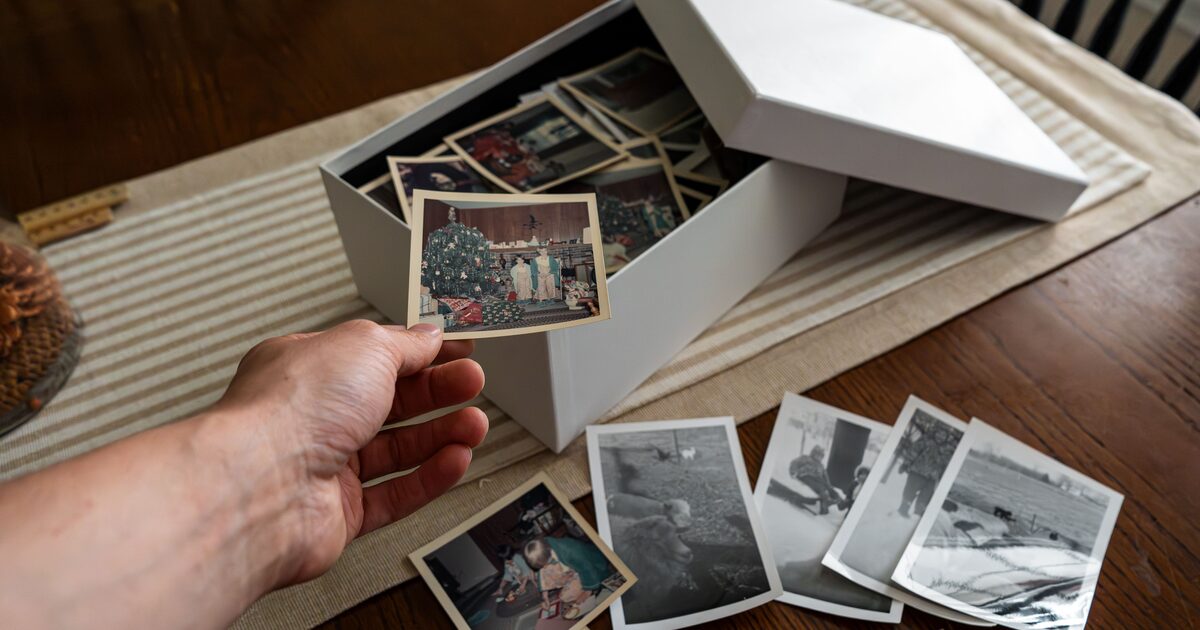
Someone left you a box, a binder, or a closet full of sports cards, and now you are staring at it wondering what it is worth and what you are supposed to do. The honest first answer is to slow down. The fastest way to destroy the value in an inherited sports card collection is to act on it before you understand it.
Before you sell, clean, or reorganize anything, do these five things: leave the cards physically alone, sort only by era and star player, identify the few cards that could carry real value, get an honest market read on those, and only then decide how to sell. Most inherited boxes are common, but the handling you do in the first hour can still cost you the exceptions.
That last point is the one nobody warns you about. Here is the full sequence.
1. Do no harm: do not clean, wipe, or trim anything
The instinct to make old cards look nicer is exactly the instinct that wrecks their value. Wiping a card with a cloth adds fine surface scratches. Water or cleaning fluid stains the cardboard. Trimming a frayed edge, even slightly, turns a gradable card into an “altered” one that no grader will slab and few buyers will touch.
Condition is most of what determines a card’s value, and graders assess the card exactly as it survived. A dinged, dusty, untouched card is worth more than the same card “cleaned” into damage. If a card is dirty, leave it dirty. The only safe handling is to put valuable-looking cards into penny sleeves and top loaders, which we cover in how to store sports cards, and otherwise touch them as little as possible.
2. Resist the panic sale
The second trap is selling the whole lot to the first buyer who offers a round number. Card shops and “we buy collections” buyers are running a business, and a fast cash offer for an unsorted box is priced to protect them against the unknown, not to pay you for the exceptions hiding in it.
There is no urgency here. Cards do not spoil. Taking a weekend to triage costs you nothing and routinely changes the number by an order of magnitude, because the value in almost any collection is concentrated in a handful of cards, not spread evenly across the box.
3. Sort by era and star, not by feeling
You are not cataloging yet. You are triaging, and triage means splitting the pile fast along the two lines that actually predict value: age and player.
- Pre-1980 cards are the vintage tier and the most likely to hold real money, especially stars and Hall of Famers in decent shape.
- 1987 to 1994 cards are the junk-wax era. They were printed in enormous quantities, so the overwhelming majority are worth cents regardless of the name on the front. We explain the era, and its few real exceptions, in are your cards from 1987-1994 worth anything.
- Modern cards (mid-1990s on) are a mixed bag, where value hides in rookies, parallels, numbered cards, and high grades rather than base cards.
Within each era, pull the stars and rookie cards to the front. A shoebox sorted this way tells you in twenty minutes where, if anywhere, the value sits.
4. Identify the few cards that could matter, then get a real read
Now look hard at the small pile you pulled forward. For each candidate, you need three facts before you can price it: the exact card (set, year, number), whether it is a base card or a scarcer parallel, and its condition. Those three together, not the player’s fame, decide the value.
This is where guessing hurts most. A star’s base card and that same star’s numbered rookie parallel can differ in price by a hundred times, and they can look nearly identical to an untrained eye. Check sold prices, not asking prices, for the exact card and grade. Our what is my sports card worth guide walks through building an honest number from real sales.
5. Match the sale method to what you actually have
Only after triage do you choose how to sell, and the right venue depends on value tier:
- Common cards in bulk are rarely worth listing one by one. Selling them as lots, or accepting that they are keepsakes rather than assets, is usually the honest outcome.
- Mid-value singles tend to do best on a marketplace like eBay, where the buyer pool is largest. Just price in the fees: eBay’s final-value fees and shipping meaningfully cut the take on lower-priced cards, as fee references like TCG Fee Calc lay out.
- Genuinely valuable cards deserve more care. Graded, high-value cards can be worth consigning to an auction house or selling through a specialist, and grading a clean key card first can lift the price, as guides on selling graded cards note.
We compare the venues honestly, fees and all, in where to sell sports cards. The rule of thumb: the more a card is worth, the more the selling method matters, and the less it is worth, the faster you should let it go in bulk.
The honest expectation
Most inherited collections, especially anything heavy in late-1980s and early-1990s cardboard, are common, and their real worth is sentimental rather than financial. That is not bad news. It means you can relax, skip the frantic selling, and enjoy the box for what it is. The value, when it exists, lives in a few specific cards, and the five steps above are simply how you avoid damaging those few while you find them.
The single fastest way to run the triage is to photograph the cards you pulled forward. A scan with RookieScan identifies each one, flags whether it is a base card or a scarcer parallel, reads condition, and returns a value range built from sold prices. It turns “I have no idea what any of this is” into a sorted, honestly priced short list in an afternoon, without you touching a thing you should not.