
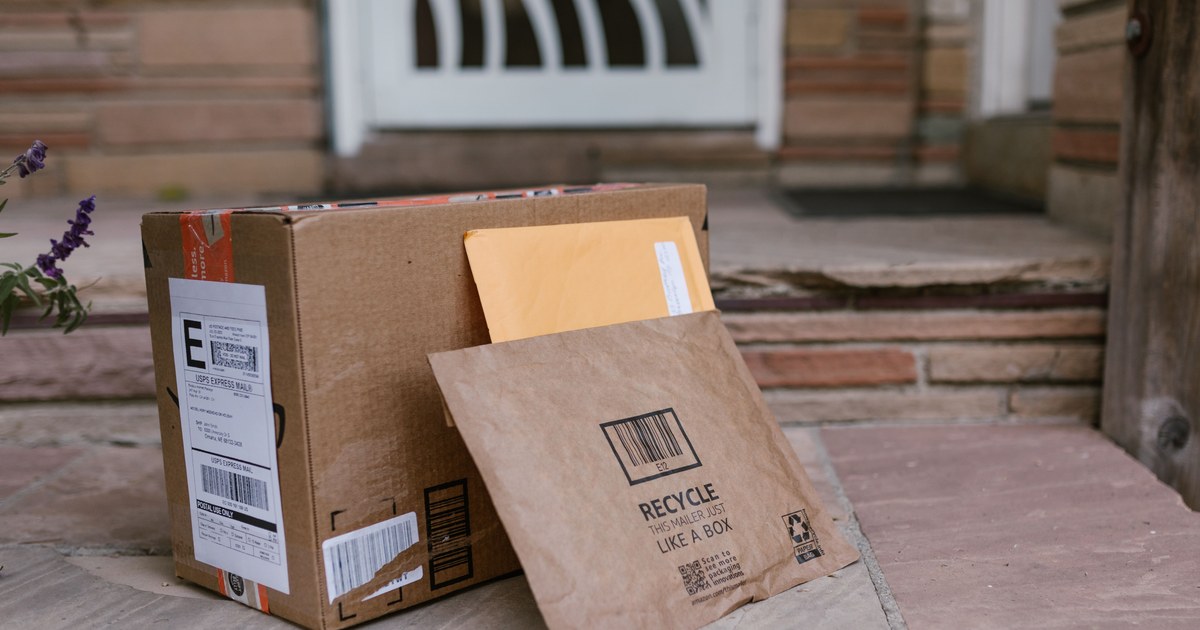
Most advice about how to ship sports cards is really a postage comparison: this option costs about a dollar, that one costs eight, pick whichever is cheaper. That framing skips the part that matters. Shipping is the one step where a card you already described, photographed, and sold can change condition in transit, and condition is most of what the buyer paid for. A corner that gets touched between your mailbox and theirs is not a cosmetic issue. It is a grade.
Ship sports cards in four layers: a penny sleeve, a rigid top loader, a team bag taped shut, and a bend-resistant mailer or box. Use a plain envelope only for cheap commons. Anything worth real money ships tracked, because a damaged card and a lost package both come out of the seller’s pocket, not the carrier’s.
That is the whole protocol. What follows is why each layer exists, and how to decide between a stamp and a tracked package without guessing.
Why does packing decide what the card is worth?
Grading scales are built around flaws too small to see across a room. CGC’s own scale calls a Gem Mint 10 “a nearly flawless card with sharp corners, excellent centering, and a clean surface with no visible defects,” while the grade just below it allows only “slight centering variance or minor surface issues,” and the one after that already shows “noticeable but moderate wear such as minor corner softening or light surface marks.” That is the entire distance between grades: a softened corner or a shifted centering line, easy for a package to cause and impossible to fix afterward.
Transit damage lands squarely in that range. A card that slides inside a loose mailer and taps a corner on the way does not arrive visibly broken. It arrives one grade lower than the card you listed, and the price difference between adjacent grades is not proportional to the difference in condition. The gap at the top of the scale is the most extreme version of this, as laid out in PSA 9 vs PSA 10, but the same asymmetry runs all the way down.
It matters most for raw cards. A buyer paying a premium for a raw card is usually paying for grade potential, and packing that removes that potential has sold them something cheaper than what they bought.
What is the four-layer protocol for shipping sports cards?
Each layer solves a different failure, which is why skipping one is not a shortcut.
- Penny sleeve. The thin soft sleeve stops surface scratches and fingerprints while the card is handled and slid into the next layer. It does nothing structural.
- Top loader. The rigid shell is the bend protection, and the standard 35pt size fits a sleeved card. Always sleeve first; a bare card can scuff against the top loader’s interior.
- Team bag. The loaded top loader goes into a resealable team bag. Cardshellz’s shipping guide describes the team bag as doing two jobs: creating a moisture barrier against rain, humidity, and condensation, and keeping the top loader from shifting inside the mailer. Tape the bag shut, never the top loader itself, and use blue painter’s tape rather than packing or scotch tape so nothing bonds to plastic near the card.
- Rigid outer layer. All Vintage Cards’ packing walkthrough sandwiches the bagged holder between two pieces of cardboard before it goes into a padded mailer or box. The cardboard is what defeats a bend; a bubble mailer alone is padding, not stiffness.
None of this is expensive, and it is the same supply cupboard you already keep for storage. The tiering logic in how to store sports cards covers what is worth stocking.
Plain white envelope or tracked package?
The postage numbers are small and almost beside the point. A one-ounce First-Class letter runs $0.82 in a Forever stamp, and USPS adds a $0.49 nonmachinable surcharge to envelopes that are lumpy or rigid, so a properly stiffened card envelope is roughly $1.31. USPS also states outright that letters must stay flat at no more than a quarter inch thick, and warns against putting rigid objects, hard plastic card cases named specifically, loose in unpadded paper envelopes, where they can tear out, jam sorting machines, or be lost.
eBay’s Standard Envelope is the structured version of the same idea: three ounces maximum, a quarter inch maximum thickness, limited tracking included, priced at $0.78 for one ounce through $1.36 for three. Its shipping protection caps at $20 on a single-item order and $50 on a combined one, which is the honest statement of what an envelope is for. A tracked USPS Ground Advantage package starts at $7.90 at a Post Office counter, arrives in two to five days, and includes both tracking and $100 of insurance.
So the real decision is not the six-dollar postage gap. It is exposure. A seller is protected when tracking shows delivery to the buyer’s address, so an untracked envelope gives you no defense if a buyer claims the card never arrived. Orders of $750 or more need signature confirmation on top of that tracking to stay protected, which costs $5.15 at a Post Office or $4.15 bought online, and it is worth adding well below that threshold too.
Put plainly: an envelope is appropriate when losing the card outright would annoy you and nothing more. Cardshellz’s guide reaches the same conclusion from the seller’s side, saying a plain white envelope should never be the default and that anything over about $20 belongs in a tracked service. Everything above that line ships tracked, and the rest of the listing hygiene that keeps disputes rare is covered in how to sell sports cards on eBay.
How does a graded slab change the packing?
A slab is not a card in a holder, it is a rigid brick. The grader already supplied the sleeve and the rigid shell, so the raw-card stack does not apply, and the failure mode is different: slabs crack rather than crease.
Put the slab in a graded card sleeve or bag first so the case itself does not get scratched, then wrap it and sandwich it in cardboard so it cannot move. All Vintage Cards is explicit that when multiple slabs go into a graded card box, the point is that they sit tight with no movement allowed. A snug box beats a roomy bubble mailer for exactly that reason: a slab with space to travel is a slab that arrives cracked, and once the holder is compromised the grade on the label no longer certifies anything until the card is resubmitted.
Insurance deserves a thought at this tier. Ground Advantage and Priority Mail include $100 of coverage, added insurance is purchasable up to $5,000 starting around $2.80, and Registered Mail covers up to $50,000 at a Post Office counter for the rare card that justifies it. Most slabs never need more than the included coverage. Knowing which of yours does is the point.
What actually goes wrong in transit?
The failure list is short and repetitive. Cards bend when a flexible mailer goes through automated sorting without cardboard behind it. Corners ding when contents shift inside a mailer with slack in it. Moisture gets in through an unsealed bag during a wet delivery day. Top loaders slide out of untaped bags and then out of torn envelopes. Tape applied directly to a holder ends up stuck to the card when the buyer opens it. Slabs crack when they rattle.
Every one of those is a packing decision, not bad luck, which is the useful part. It also explains why some sellers avoid the problem entirely by selling in person at a show or shop, one of the tradeoffs weighed in where to sell sports cards.
Know what the card is before you choose the packing
All of this depends on one number you need before you buy an envelope: what the card is actually worth. The honest default for most cards, especially junk-wax era and modern base, is that they are common, and paying eight dollars to track a two-dollar card is its own kind of loss.
Photograph the card with RookieScan and you get the identification and the honest range in one pass: player, set, year, card number, whether you are holding a base card or a parallel, a read on condition, and a market-based value range. That tells you which pile the card belongs in, envelope or tracked package, and whether the slab in your hand deserves the extra insurance line at the counter.
Sources
- Send Letters & Postcards (nonmachinable surcharge, quarter-inch rule), USPS
- USPS Ground Advantage service page, USPS
- Insurance & Extra Services, USPS
- eBay Standard Envelope Overview, Cardsmania
- eBay Seller Scam Prevention: Red Flags & Response Steps, Underpriced
- CGC Card Grading Guide for Beginners (2026), Grader's Choice
- How to Safely Package and Ship Your Sports Cards, All Vintage Cards
- How to Ship Trading Cards on eBay Without Damage, Cardshellz